

What to Pack for a Safari in Kenya
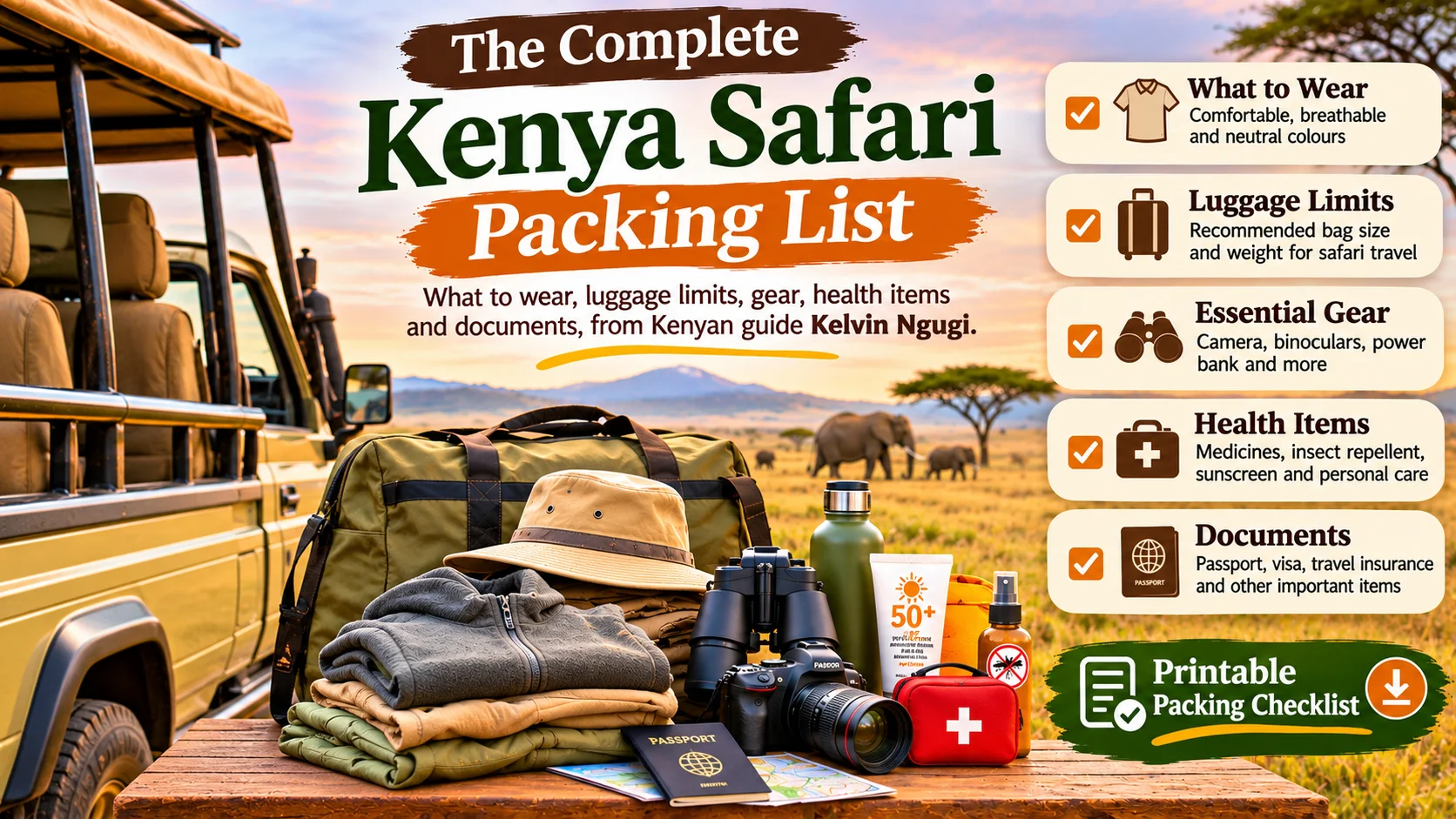
Quick answer: A Kenya safari packing list should cover neutral-coloured, breathable clothes in layers (including a warm fleece for early game drives), a wide-brimmed hat, sunscreen, insect repellent, binoculars, a camera with a zoom lens, comfortable closed shoes and your documents: passport, Kenya eTA and Kenyan travel health insurance. Pack it all in a soft bag, and keep to about 15 kg per person if you'll fly between parks.
Jambo! I'm Kelvin, a Kenyan driver-guide. I plan and guide private safaris for couples and families, and packing is one of the most common worries before a trip. The good news: you need less than you think. Most camps offer laundry, and on safari, comfort beats fashion every time.
Kenya safari packing list at a glance
Category | Must-haves |
|---|---|
Clothing | 3 to 4 lightweight shirts, 2 long-sleeved shirts, 2 pairs of trousers, 1 pair of shorts, a fleece or warm jacket, a light rain jacket |
Footwear | Comfortable closed walking shoes, sandals for camp |
Sun and insects | Wide-brimmed hat, sunglasses, SPF 30+ sunscreen, insect repellent |
Gear | Binoculars, camera with zoom lens, power bank, UK-style adapter |
Health | Anti-malaria tablets (if prescribed), personal medicines, small first-aid kit |
Documents | Passport, printed eTA, Kenyan health insurance certificate, travel insurance |
Bag | Soft duffel bag, plus a small day pack for game drives |
Luggage: what kind of bag to bring
Bring a soft bag, not a hard suitcase. Safari vehicles and light aircraft have limited space, and soft duffels squeeze in where hard cases won't.
- If you fly between parks: light aircraft from Wilson Airport usually allow about 15 kg per person, including hand luggage, in soft bags only. Check the exact limit with your airline when I confirm your flights.
- If you travel by road: limits are more relaxed, but a medium soft bag per person is still best.
- Day pack: a small backpack for game drives, holding your camera, binoculars, sunscreen, water and a warm layer.
- Extra luggage: if you're adding a beach stay or travelling on afterwards, most Nairobi hotels can store extra bags for you.
Kelvin's tip: most safari camps offer a laundry service, often included or at a small cost. Pack for 4 to 5 days and wash as you go.
What to wear on a Kenya safari
Colours: choose khaki, beige, olive, brown and soft greens. They hide dust and blend in with the bush.
Colours to avoid:
- Dark blue and black can attract tsetse flies in some areas.
- Bright white shows dust fast and stands out to wildlife.
- Bright, loud colours are best kept for the beach.
Dress in layers. Mornings on game drives can be cold, especially June to August and in highland areas like Laikipia, and middays get hot. Peel off layers as the day warms up.
Clothing checklist (per person, for a 7- to 10-day trip)
- 3 to 4 lightweight, breathable T-shirts or shirts
- 2 long-sleeved shirts (sun and mosquito protection)
- 2 pairs of lightweight trousers (zip-off trousers work well)
- 1 to 2 pairs of shorts
- 1 warm fleece or light down jacket
- 1 light, packable rain jacket (essential in November, April and May)
- Comfortable clothes for evenings at camp
- Pyjamas (nights can be cool)
- Underwear and socks for 4 to 5 days
- Swimsuit (many camps have pools)
- Scarf or buff, for dust and chilly mornings
Footwear checklist
- Comfortable closed shoes or light walking boots, broken in before the trip
- Sandals or flip-flops for camp and the shower
You don't need heavy hiking boots unless you're planning a long walking safari or a mountain climb.
Safari gear and electronics
- Binoculars: the single most useful item on safari. One pair per person is ideal; 8x42 or 10x42 are good all-rounders.
- Camera with a zoom lens: 100–400 mm or similar is ideal for wildlife; a good phone works for landscapes and camp life.
- Spare batteries and memory cards
- Power bank: some camps charge only at set times or in the main area
- Plug adapter: Kenya uses UK-style three-pin plugs (Type G), 240 volts
- Head torch or small flashlight for walking around camp at night
- Reusable water bottle
- Dust-proof bag or cover for your camera
Health and toiletries
- Anti-malaria tablets, if your travel clinic prescribes them; malaria is present in the safari parks
- Insect repellent with DEET or picaridin
- Sunscreen, SPF 30 or higher, and lip balm with SPF
- Wide-brimmed hat and sunglasses
- Personal medicines, in original packaging, with a copy of prescriptions
- Small first-aid kit: plasters, painkillers, antihistamines, rehydration sachets, motion-sickness tablets for bumpy roads
- Hand sanitiser and wet wipes
- Basic toiletries: most camps provide soap, shampoo and towels
See a travel clinic 6 to 8 weeks before your trip. I'm not a doctor, so follow their advice on vaccinations and malaria.
Documents and money
- Passport, valid for 6 months after arrival, with blank pages
- Kenya eTA for every traveller, including children, printed and on your phone (etakenya.go.ke)
- Kenyan inbound travel health insurance certificate, mandatory since October 2026 (eCitizen)
- Yellow fever certificate, if you're arriving from a yellow fever risk country
- Your own travel insurance documents
- Printed itinerary and emergency contacts
- US dollars in small, newer notes for tips; older notes are often refused
- A credit or debit card; many camps and lodges accept cards
Packing for a family safari
Children need a few extras to stay comfortable and entertained on game drives.
- Children's binoculars and a simple camera of their own
- A wildlife spotting checklist or animal book
- Snacks and a refillable water bottle each
- Child-safe insect repellent and high-SPF sunscreen
- A sun hat with a chin strap (open roofs can be windy)
- Warm layers: children feel the morning cold more than adults
- Headphones, books or games for transfer days
- A favourite comfort toy for the first nights in a new place
- Each child's own eTA, health insurance certificate and passport
Read more in our private family safaris.
Packing for couples and honeymoons
- One smart-casual outfit each for a special dinner or bush dinner
- A warm layer for the hot air balloon flight, which takes off at dawn
- Swimwear for camp pools and the beach
- A small tripod or phone grip for sunset photos together
What to pack by season
Season | Months | Pack extra |
|---|---|---|
Long dry season | Late June to October | Warm fleece and a hat for cold mornings; scarf for dust |
Short dry season | January to March | Extra sun protection; light, breathable clothes |
Long rains | April to May | Rain jacket, quick-dry clothes, waterproof bag for your camera |
Short rains | November to early December | Light rain jacket; insect repellent |
Not sure when to go? See my guide to the best time for a Kenya safari.
What not to pack for a Kenya safari
- Plastic bags. Kenya has banned single-use plastic carrier bags, and they may be taken from you on arrival. Use packing cubes or cloth bags instead.
- Hard suitcases, especially if you're flying between parks.
- A drone, unless you've arranged permits in advance. Drones need Kenya Civil Aviation Authority approval and generally aren't allowed in parks without permission.
- Expensive jewellery and valuables you don't need.
- Strong perfume, which can attract insects.
- Too many clothes. With camp laundry, a week's worth is plenty even for a longer trip.
- Dark blue and black clothing for game drives in tsetse fly areas.
Kelvin's tip: leave space in your bag. Kenyan crafts, such as Maasai beadwork, kikoys and soapstone carvings, make wonderful souvenirs.
Frequently asked questions
What should I wear on a safari in Kenya? Neutral colours such as khaki, beige and olive, in breathable layers. Add a warm fleece for early morning game drives and a wide-brimmed hat for the midday sun. Avoid dark blue, black and bright white.
How much luggage can I take on a Kenya safari? If you fly between parks on light aircraft, the limit is usually about 15 kg per person in a soft bag. By road, limits are more relaxed, but a soft bag is still best.
Do I need hiking boots for a Kenya safari? No. Comfortable closed walking shoes are enough for most safaris. Bring light boots only if you plan a long walking safari.
Is it cold on safari in Kenya? Early mornings and evenings can be cold, especially from June to August and in higher areas like Laikipia and the Maasai Mara. Bring a fleece or light jacket.
What plug type does Kenya use? Kenya uses UK-style three-pin plugs (Type G) at 240 volts, so most visitors need an adapter.
Can I do laundry on safari? Yes, most camps and lodges offer laundry, so you can pack for 4 to 5 days even on a longer trip.
Ready for your safari?
When you book with me, I send a full packing checklist for your season and parks before you travel. Every trip is operated by me under Wild Sights Safaris (TRA No: TRA1/22/C01/76306).
Plan your safari with Kelvin →
Sources
Checked in November 2026:
- Kenya Directorate of Immigration Services: Kenya eTA portal
- Ministry of Health, Gazette Notice No. 11492 (30 July 2026), and eCitizen inbound travel health insurance
- CDC Yellow Book: Kenya yellow fever and malaria guidance (summary)
By Kelvin Ngugi, founder of Safari Trips in Kenya and Wild Sights Safaris (TRA No: TRA1/22/C01/76306) · Last updated: November 2026
Ready to plan your own Kenya family safari?
Our team can help make these ideas fit your travel dates, family ages and preferred level of comfort.
Plan Your Family Safari